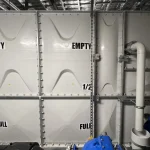
GRP water tanks provide reliable water storage for commercial, industrial, and fire protection applications. However, their composite construction does not make them immune to damage.
Cracked panels, leaking joints, deteriorated gaskets, and structural movement can affect tank performance. Some problems develop gradually, while others result from installation defects or accidental damage.
Understanding GRP water tank repairs helps facility owners make informed decisions about damaged storage systems. Different defects require different repair methods. A leaking gasket may need replacement, while a damaged structural panel may require more extensive work.
Not every crack can be repaired safely. The location, severity, and underlying cause determine whether restoration is appropriate. This guide explains common GRP tank defects, professional repair methods, and the circumstances requiring panel replacement.
It also examines repair considerations for potable water and fire protection tanks in Australia.
Understanding GRP Water Tank Damage
Glass Reinforced Plastic (GRP) is a composite material combining reinforcing glass fibres with a polymer resin system. The fibres provide reinforcement, while the resin binds them together and helps protect the structure. GRP tanks are often assembled from modular panels connected using bolts, gaskets, and supporting components.
Modular GRP panel tanks consist of reinforced composite panels connected using bolts, gaskets, and supporting components.
This construction allows large storage systems to be assembled from individual sections. However, each component contributes to the tank’s overall performance.
Damage may affect:
-
GRP panels and their reinforced surfaces.
-
Bolted connections between adjacent panels.
-
Sealing gaskets and joint interfaces.
-
Internal supports and bracing components.
-
Pipe connections, flanges, and penetrations.
-
Structural connections between panels and supporting elements.
A defect affecting one component may place additional stress on surrounding sections. For example, an incorrectly supported panel can experience movement that damages adjacent seals.
Similarly, a leaking joint may indicate more than gasket deterioration.
Effective GRP tank repair begins with identifying the cause, not simply covering the visible defect. The repair approach must also account for the tank’s construction and intended application.
Common Types of GRP Water Tank Damage
GRP tanks can develop several types of damage throughout their operational life. Some defects affect watertightness, while others compromise structural performance.
Understanding these differences helps determine the appropriate repair method.
Cracks in GRP Tank Panels
Panel cracking is one of the most recognisable forms of GRP tank damage. Cracks may develop following excessive loading, impact, installation problems, or structural movement. Their appearance can vary considerably.
Common examples include:
-
Fine surface cracks affecting the outer resin layer.
-
Cracks extending through reinforced laminate sections.
-
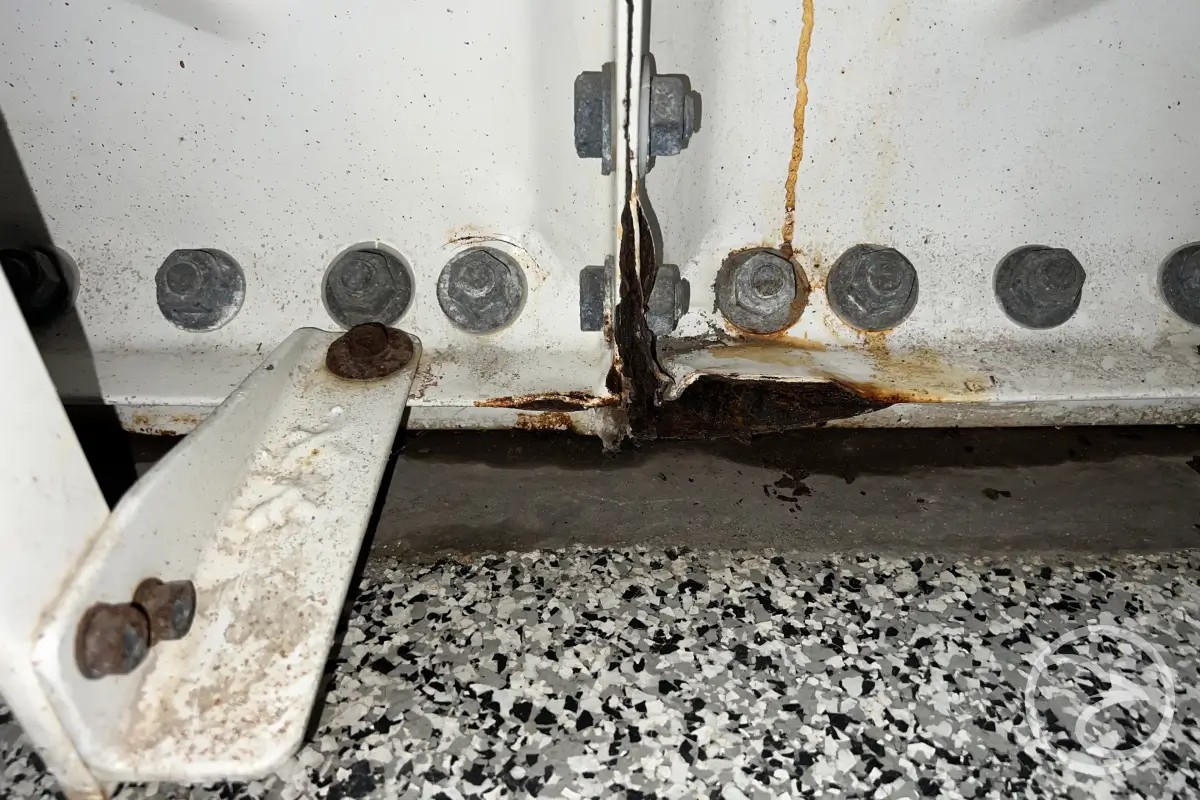
Fractures around bolt holes or panel connections.
-
Cracks near pipe penetrations.
-
Damage associated with localised impact or excessive deformation.
Not every visible surface crack represents structural failure. However, a minor-looking crack may extend deeper into the composite material. Visual appearance alone cannot establish whether the panel remains structurally sound.
Cracks affecting reinforcement or load-bearing areas require professional assessment before repair. Simply applying sealant over a crack may conceal damage without addressing its cause.
Leaks Around GRP Panel Joints
Modular GRP tanks depend on properly sealed connections between individual panels. These joints commonly incorporate compressible gaskets and bolted connections. Water leakage can occur when sealing pressure becomes uneven or the gasket loses effectiveness.
Possible causes include:
-
Deteriorated or incorrectly installed gaskets.
-
Uneven bolt tightening.
-
Panel movement or misalignment.
-
Damaged sealing surfaces.
-
Distortion around joint connections.
-
Inappropriate replacement gasket materials.
A leaking joint does not necessarily mean the GRP panel itself has failed. In some cases, replacing the gasket restores the required seal.
However, persistent leakage may indicate underlying deformation or connection problems. Repairing the seal without correcting these issues can result in repeated failures.
Damaged Gaskets and Seals
Gaskets help maintain watertight connections between GRP panels and other tank components. Their condition depends on material compatibility, compression, operating conditions, and installation quality. Over time, some sealing materials may harden, deform, or lose their ability to maintain compression.
Common warning signs include:
-
Visible deterioration around exposed gasket edges.
-
Localised leakage along panel connections.
-
Displaced or uneven sealing material.
-
Repeated leakage following temporary sealing work.
-
Signs of movement around bolted joints.
Replacing damaged seals may resolve leakage when the adjoining components remain serviceable. However, gasket replacement must follow the tank manufacturer’s specifications.
Incorrect gasket thickness or material can prevent the joint from sealing properly.
GRP Surface Delamination
Delamination occurs when layers within a composite laminate separate. This can reduce the material’s ability to transfer loads through its reinforced structure. Possible causes include manufacturing defects, impact damage, excessive loading, or deterioration within the laminate.
Signs may include:
-
Raised or blistered surface areas.
-
Localised separation between laminate layers.
-
Unusual surface movement under loading.
-
Exposed or damaged reinforcing fibres.
-
Areas producing a different response during appropriate inspection testing.
Surface appearance does not always reveal the full extent of delamination. Professional assessment may require additional examination beyond routine visual inspection.
The repair method depends on the affected area, laminate condition, and structural importance. Extensive delamination may make panel replacement more appropriate than localised repair.
Panel Deformation and Structural Damage
GRP tank panels are designed to withstand specified loads under their intended operating conditions. However, excessive movement can indicate problems with supporting structures or panel connections.
Possible contributing factors include:
-
Inadequate or damaged internal bracing.
-
Foundation settlement.
-
Incorrect assembly.
-
Excessive loading.
-
Damaged connection points.
-
Changes affecting the tank’s original structural arrangement.
Visible bulging, misalignment, or unusual panel movement should not be treated as cosmetic damage. These conditions may indicate that loads are no longer distributed as intended.
Applying a surface patch will not correct an underlying structural problem. Structural deformation requires an assessment of the complete affected assembly before repairs proceed.
GRP Water Tank Repair Methods
Different forms of damage require different repair techniques. The selected method must suit the defect, composite construction, and operating conditions.
Professional GRP tank repair methods may include composite laminate restoration, joint resealing, component replacement, or panel replacement. Not every method is suitable for every GRP tank.
Manufacturer requirements and engineering assessments should guide the final repair decision.
Composite Laminate Repairs
Composite laminate repair involves restoring damaged sections using compatible reinforcing materials and resin systems. This method may be suitable for certain localised defects where structural restoration is technically feasible.
The process generally involves:
-
Identifying the full extent of damaged material.
-
Determining whether the existing laminate can support a repair.
-
Removing unsuitable or deteriorated material.
-
Preparing the surrounding composite surface.
-
Applying compatible reinforcement and resin.
-
Allowing the repair to cure under suitable conditions.
-
Checking the completed repair against applicable acceptance criteria.
Surface preparation is particularly important. Poor bonding can occur when moisture, contamination, or deteriorated material remains within the repair area. The replacement laminate must also suit the original panel’s construction.
Adding fibreglass reinforcement does not automatically restore the original structural capacity. The repair design must account for reinforcement orientation, thickness, bonding, and loading.
Where structural performance is involved, an appropriately qualified specialist should determine the repair requirements.
Resin and Fibreglass Reinforcement
Some localised GRP defects can be repaired using compatible resin and glass-fibre reinforcement. The reinforcement helps restore the affected composite section when an appropriate repair design is available. However, resin selection requires careful consideration.
Different resin systems have different properties, including chemical resistance, curing requirements, and compatibility. A resin suitable for one industrial application may not be appropriate for drinking water storage.
Similarly, a repair material may perform differently under continuous immersion than under occasional moisture exposure.
Important considerations include:
-
Compatibility with the existing GRP laminate.
-
Required mechanical properties.
-
Exposure to stored water or chemicals.
-
Surface preparation requirements.
-
Curing temperature and conditions.
-
Long-term immersion performance.
-
Applicable potable water requirements.
Repairs should follow a documented method appropriate to the tank and defect. Unverified products should not be applied simply because they are marketed as fibreglass repair materials.
Joint Resealing and Gasket Replacement
Joint repairs are common where leakage occurs between otherwise serviceable GRP panels. The work may involve replacing damaged gaskets or restoring the original sealing arrangement.
Before replacement, technicians should examine the adjoining panels and connection surfaces. A gasket cannot compensate reliably for significant panel distortion or damaged joint geometry.
A typical repair assessment considers:
-
Whether the joint can be safely accessed.
-
The condition of the existing gasket.
-
Panel alignment and sealing surfaces.
-
Bolt and connection integrity.
-
Manufacturer-specified gasket materials.
-
Required tightening sequence and torque.
-
Appropriate post-repair leakage testing.
In many cases, the affected joint must be unloaded or the tank drained before disassembly. The required isolation procedure depends on the tank’s construction and operational role. Bolts should not be tightened indiscriminately to stop leakage.
Excessive tightening can damage GRP connections or create uneven compression. Correct assembly procedures are essential for a durable repair.
Localised Panel Repairs
Some defects affect a limited area without compromising the entire panel. Depending on the damage, a specialist may recommend localised composite restoration. However, the position of the defect matters.
Damage near corners, bolted connections, or heavily loaded areas may require a different approach.
The repair assessment should consider:
-
Defect size and depth.
-
Condition of surrounding reinforcement.
-
Proximity to structural connections.
-
Panel loading and support arrangements.
-
Previous repairs.
-
Compatibility with the original laminate.
-
Manufacturer-approved repair procedures.
A repair suitable for a minor surface defect may be unsuitable for a through-thickness fracture. The completed repair must also remain compatible with the tank’s stored contents.
Where these conditions cannot be satisfied, panel replacement may offer a more reliable solution.
Complete GRP Panel Replacement
Panel replacement may be necessary when damage cannot be restored safely through localised repairs. Modular construction can make replacement possible without replacing the entire tank.
However, removing a panel may affect surrounding connections and structural supports. Replacement work must therefore follow an appropriate sequence.
The process may involve:
-
Isolating and safely draining the tank.
-
Assessing the surrounding panel assembly.
-
Confirming replacement panel specifications.
-
Supporting affected components where necessary.
-
Removing the damaged panel.
-
Inspecting adjoining joints and connections.
-
Installing compatible replacement components.
-
Restoring the specified sealing arrangement.
-
Completing appropriate testing before recommissioning.
Replacement panels must match the required design characteristics. Dimensions alone do not establish compatibility.
Panel strength, connection geometry, materials, and manufacturer requirements also matter.
How Professionals Assess GRP Tank Damage
A successful repair depends on understanding the defect before selecting a restoration method. This assessment should distinguish between cosmetic deterioration, watertightness problems, and structural damage.
Professional tank repairs begin with identifying the underlying cause of damage.
Identifying the Source of Damage
The visible location of a leak does not always identify its original source. Water may travel along joints or supporting components before becoming visible.
Technicians may examine surrounding panels, connections, and penetrations to locate the actual defect. They should also consider whether the problem is isolated or part of a wider pattern.
For example, repeated joint leakage may suggest movement affecting several connected panels.
Assessing Structural Integrity
Structural assessment becomes particularly important when cracks, deformation, or laminate separation are present.
The evaluation may consider:
-
Panel geometry and visible deformation.
-
Reinforcement condition.
-
Connections and supporting components.
-
Evidence of foundation movement.
-
The location of previous repairs.
-
Operating loads and water levels.
-
Whether the original design conditions remain valid.
Some defects require specialist engineering evaluation. A routine inspection cannot always establish the remaining strength of damaged composite material.
Where structural integrity is uncertain, the tank should not return to normal operation without appropriate clearance.
Selecting a Suitable Repair Method
The repair decision should reflect both the defect and the tank’s operating requirements. A small leak caused by gasket deterioration may require a relatively straightforward component replacement.
A structural crack may require engineered laminate restoration or complete panel replacement. The assessment should also consider access, downtime, and available replacement components.
A technically possible repair is not necessarily the most practical long-term solution.
Can a Cracked GRP Water Tank be Repaired?
Some cracked GRP water tank panels can be repaired, but repairability depends on the damage. The size of the crack is only one consideration. Its depth, location, and effect on reinforcement are equally important.
A localised defect in a non-critical area may be suitable for an approved composite repair. However, cracking around structural connections can be more difficult to address.
Cracks associated with ongoing panel movement also require the underlying cause to be corrected. Otherwise, the repaired section may experience the same loading conditions again.
The following comparison illustrates how repair decisions can differ.
| Damage condition | Possible approach |
|---|---|
| Minor surface resin damage | Assess suitability for localised surface restoration |
| Localised laminate damage | Consider specialist composite repair |
| Deteriorated joint gasket | Replace compatible sealing components |
| Crack near a structural connection | Obtain specialist structural assessment |
| Extensive laminate separation | Assess panel replacement |
| Severe panel deformation | Investigate structural causes and replacement requirements |
These examples are not universal repair rules. Final decisions must reflect the tank’s design, manufacturer guidance, and actual condition.
Repairing GRP Tanks Used for Potable and Fire Water Storage
GRP tanks serve different applications, and their operating requirements can affect repair decisions. A repair suitable for general industrial storage may not satisfy potable water requirements.
Fire protection tanks also introduce operational considerations beyond watertightness.
Potable GRP Water Tank Repairs
Repairs involving drinking water storage require careful material selection and contamination control. Repair products that contact stored water must meet applicable suitability requirements.
In Australia, AS/NZS 4020 is relevant to testing products for use in contact with drinking water. However, suitability depends on the product, application, and applicable regulatory requirements.
Technicians should confirm that repair materials are appropriate for their intended contact conditions.
Other considerations include:
-
Preventing contamination during repair work.
-
Removing debris and unsuitable materials.
-
Following approved curing procedures.
-
Using appropriate cleaning and disinfection processes.
-
Completing required water quality checks before returning the tank to service.
A repair that restores watertightness does not automatically establish drinking water suitability. Both material compatibility and hygienic recommissioning must be considered.
GRP Fire Water Tank Repairs
Fire water tanks support systems that may need to operate during emergencies. Consequently, repair planning must account for the availability of the fire protection water supply. Taking a tank out of service may affect the building’s fire protection arrangements.
Repairs should therefore be coordinated with the relevant responsible parties. Applicable Australian Standards, system design requirements, and impairment procedures must be considered. AS 1851 addresses routine servicing of fire protection systems and equipment.
However, it should not be treated as a universal specification for GRP composite repair methods. The repair approach must also satisfy the tank’s applicable design and performance requirements. Before returning a repaired fire tank to service, the responsible specialists should verify its suitability.
This may involve examining watertightness, structural condition, and affected system components. The required checks depend on the tank and the nature of the work.
GRP Tank Repair vs Panel Replacement
One important decision is whether to restore the existing component or replace it. Both approaches can be appropriate under different circumstances.
The correct choice depends on technical feasibility rather than repair cost alone.
When Localised Repair may be Appropriate
Localised repair may be considered when:
-
Damage affects a limited area.
-
The surrounding laminate remains suitable.
-
Structural requirements can be satisfied.
-
Compatible repair materials are available.
-
The original cause can be addressed.
-
The repair can be properly inspected and tested.
A localised repair may preserve serviceable components and reduce unnecessary replacement work. However, its effectiveness depends on correct design and execution.
When GRP Panel Replacement may be Preferable
Replacement may be more appropriate when:
-
Damage extends through a significant panel area.
-
Structural deformation is present.
-
Reinforcement deterioration is extensive.
-
Previous repairs have repeatedly failed.
-
The panel no longer satisfies its design requirements.
-
A reliable repair method cannot be established.
Replacing one panel may also provide an opportunity to examine nearby connections. However, replacement work can introduce additional risks if adjoining components are disturbed.
A suitable installation and testing procedure remains essential.
Comparing Repair and Replacement
| Consideration | Localised repair | Panel replacement |
|---|---|---|
| Typical application | Suitable isolated defects | Extensive or unsuitable damage |
| Original material retained | Usually | Damaged panel removed |
| Structural assessment | Depends on defect | Often important for replacement planning |
| Material compatibility | Repair laminate or sealant | Replacement panel and connections |
| Access requirements | Vary by location | May require wider disassembly |
| Testing | Based on repair scope | Based on affected assembly |
Neither option guarantees a shorter shutdown. Actual downtime depends on access, damage severity, curing requirements, and replacement availability. The final decision should prioritise safe, reliable long-term operation.
Our tank refurbishment guide explains how existing water storage tanks can be restored.
Common Mistakes During GRP Water Tank Repairs
Poor repair practices can create additional damage or allow the original problem to return. Several mistakes are particularly important to avoid.
1. Applying Sealant Without Investigating the Leak
A visible leak may originate from a damaged gasket, panel movement, or structural cracking. Applying sealant without identifying the cause may provide only temporary improvement.
The underlying defect can continue developing.
2. Using Incompatible Repair Materials
Not every resin, adhesive, or sealing product is suitable for GRP water tanks. Material compatibility depends on the existing laminate and operating environment.
Potable water applications require additional consideration.
3. Ignoring Structural Movement
Cracks may develop because a panel is moving beyond its intended limits. Repairing the surface without correcting the movement can lead to recurring damage.
Supporting components and connections must be assessed where relevant.
4. Inadequate Surface Preparation
Composite repairs depend heavily on the condition of the bonding surface. Moisture, contamination, and deteriorated laminate can interfere with adhesion.
Preparation must follow the selected repair system’s requirements.
5. Incorrect Gasket Installation
An unsuitable gasket may fail to maintain the required seal. Uneven tightening can also create additional stress around panel connections.
Replacement procedures should follow the manufacturer’s specifications.
6. Returning the Tank to Service too Early
Some repair materials require controlled curing before exposure to water or operational loading. Premature refilling can compromise the completed work.
Recommissioning should follow the approved repair procedure and applicable testing requirements.
What Happens After a GRP Tank Repair?
Completing the physical repair is not necessarily the final stage. The repaired tank must be assessed before returning to normal operation. The required checks depend on the repair method and the tank’s application.
Repair Inspection
Technicians should examine the repaired area for visible defects and installation problems. For composite repairs, this may include checking the completed laminate against specified acceptance criteria.
For gasket replacement, the assessment may focus on alignment and connection integrity.
Watertightness Testing
Appropriate testing helps determine whether repaired joints or panels retain water as intended. The method should reflect the tank’s design and the affected components.
Refilling must also account for structural loading and operational safety.
Recommissioning
Before returning the tank to service, the responsible team should confirm relevant operational requirements.
These may include:
-
Completion of required repair inspections.
-
Acceptable leakage test results.
-
Confirmation of structural suitability where required.
-
Completion of potable water hygiene procedures.
-
Restoration of affected fire protection arrangements.
-
Recording repair materials and completed work.
Documentation can help future technicians understand the tank’s repair history. It also provides a reference when evaluating recurring defects.
How GRP Tank Repairs Relate to Long-Term Maintenance
Repair and maintenance are closely related, but they serve different purposes. Maintenance focuses on monitoring tank condition and reducing the likelihood of deterioration. Repair addresses identified defects and restores affected components where technically feasible.
A maintenance inspection may reveal a leaking joint or damaged panel. However, determining the correct repair method requires a separate assessment.
Facility owners can use a structured GRP water tank maintenance checklist to support routine condition monitoring. That checklist covers inspection intervals, cleaning, and signs of deterioration.
The present guide focuses instead on the technical response after damage has been identified. Both approaches contribute to responsible water storage management.
Conclusion
GRP water tanks can develop cracks, leaking joints, damaged gaskets, and structural defects throughout their service life. The correct repair method depends on the type, location, and severity of damage.
Localised composite repairs may restore certain defects, while extensive damage can require panel replacement. Successful repairs also depend on compatible materials, suitable surface preparation, and appropriate testing.
For potable and fire water storage, additional operational and compliance requirements must be considered.