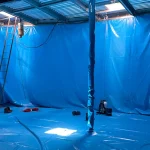
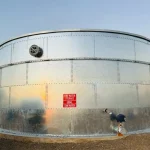
Industrial and commercial water storage systems rely heavily on internal membranes that act as protective barriers between stored liquids and tank structures. Over the past two decades, modern membrane materials have evolved significantly, incorporating new formulations, stabilisers, and reinforcement technologies that enhance durability, chemical resistance, and long-term performance. These advancements are grounded in materials science, where polymer engineering, molecular structuring, and additive technologies work together to create more reliable and longer-lasting tank protection solutions.
Modern membranes are no longer simple sheets of flexible polymer. They are engineered systems designed to resist mechanical stress, temperature fluctuations, chemical exposure, and biological activity. Understanding the science behind today’s membrane materials allows facility operators to make informed decisions when selecting protective linings for harsh environments or long-term applications.
1. Evolution of Polymer Engineering in Tank Membranes
Traditional membranes were often limited by UV sensitivity, low tensile strength, or vulnerability to chemical degradation. Advances in polymer science have led to:
- improved molecular crosslinking
- enhanced elasticity that resists cracking
- greater resistance to stress fatigue
- higher stability under extreme temperatures
These developments create membranes that perform better in environments that expose tanks to thermal cycling, hydrostatic pressure, or abrasive conditions.
Modern formulations also produce more uniform material structures, reducing weak points that previously contributed to premature membrane failure.
2. Increased Chemical and Environmental Resistance
A key benefit of modern membrane materials is their ability to withstand a broader range of chemical exposures. Innovations in polymer chemistry allow membranes to resist:
- disinfectants used in potable water systems
- minerals and dissolved solids
- mild industrial chemicals
- variations in pH levels
In addition, stabilising additives help membranes resist long-term UV exposure and oxidative damage. This is especially important for tanks located outdoors or in industrial zones where atmospheric conditions can accelerate material aging.
Improved chemical resistance reduces the risk of swelling, softening, or brittleness — common issues with earlier membrane technologies.
3. Enhanced Tensile Strength and Tear Resistance
Modern membranes often incorporate reinforcement layers or advanced polymer blends that significantly increase mechanical durability. These features help membranes withstand:
- hydrostatic pressure at full tank capacity
- movement caused by foundation settling
- installation stresses
- abrasion from sediment or particulate matter
High-tensile membranes maintain their shape and performance even under stress, reducing the likelihood of leaks or structural compromise over time.
4. Advanced Barrier Properties
Modern membrane materials provide superior impermeability, restricting the movement of water, vapour, and contaminants. This is achieved through:
- low-permeability polymer structures
- precision manufacturing with fewer micro-defects
- multilayer compositions engineered for specific environments
These improved barrier properties protect both stored water and the tank substrate, preventing corrosion, microbial intrusion, or chemical absorption.
These advancements show how modern membrane design aligns with the principles used in high-quality liner tank solutions across the industry.
Barrier innovations are especially beneficial for long-term applications where tanks remain filled for extended periods, such as industrial processes, firefighting systems, or municipal storage.
5. Improved Flexibility for Extreme Temperature Conditions
One of the biggest challenges for older membrane materials was stiffness or brittleness at low temperatures. Modern formulations maintain flexibility across a wide thermal range, allowing membranes to:
- absorb expansion and contraction of the tank
- resist cracking during cold-weather cycles
- maintain elasticity under heat exposure
This temperature resilience is essential for regions with seasonal extremes or tank systems located in remote or harsh environments.
6. Greater Longevity Through Stabiliser Technologies
Modern membrane materials often include advanced stabilisers that delay degradation. These may include:
- UV absorbers
- anti-oxidant packages
- heat stabilisers
- anti-microbial additives
Stabilisers extend service life by protecting the membrane structure from environmental and operational stressors. As a result, membranes remain effective for significantly longer periods compared to older materials.

7. Reduced Risk of Microbial Growth
Some modern membranes incorporate anti-microbial properties or smooth, non-porous surfaces that discourage bacterial colonisation. This reduces the risk of:
- biofilm formation
- unpleasant odours
- microbial contamination
- internal staining or residue buildup
Improved hygiene benefits industries with strict water quality requirements, such as agriculture, food production, or potable water systems.
8. Precision Manufacturing and Quality Control
Advances in production technology ensure more consistent thickness, fewer defects, and better material uniformity. These improvements reduce weak points that once contributed to membrane failure.
Precision manufacturing enables membranes to:
- maintain reliable performance under pressure
- resist punctures and abrasions
- provide consistent protective characteristics across the entire surface
Uniformity is essential for large tanks where minor inconsistencies can lead to long-term wear or unexpected leaks.
Conclusion
Modern membrane materials represent a significant leap forward in the protection of industrial and commercial water storage systems. Through advances in polymer engineering, structural reinforcement, stabiliser technology, and quality-controlled manufacturing, today’s membranes offer superior chemical resistance, strength, flexibility, and long-term reliability.
As industries continue to demand durable and sustainable solutions, understanding the science behind modern membrane materials provides valuable insight into how advanced materials contribute to extended tank protection and system integrity.