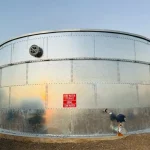
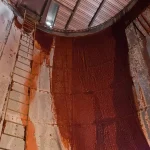
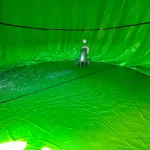
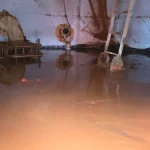
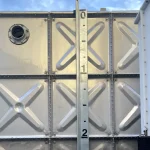
A fire water tank must keep its required water supply available when the fire protection system needs it. However, the tank structure alone does not always provide sufficient long-term protection against water loss or internal deterioration.
A fire water tank lining creates a protective barrier between stored water and the tank structure. Depending on the system, the lining may help prevent leakage, isolate water from deteriorated surfaces, and reduce exposure to corrosion.
Different liner materials provide different levels of flexibility, durability, chemical resistance, and weather resistance. The right choice therefore depends on more than tank capacity. Tank material, condition, temperature, water characteristics, installation environment, and maintenance access should all influence the decision.
This guide explains common fire tank lining materials and how to compare them for different fire water tanks.
What is a Fire Water Tank Lining?
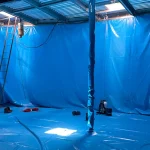
A fire tank lining is a protective internal barrier used within a water storage tank. Flexible membranes are commonly manufactured to fit the dimensions and configuration of the tank.
Fire tank lining can be considered when an existing tank requires a new containment barrier due to ageing, leakage, or internal deterioration.
The liner separates stored water from the underlying tank surface.
This barrier can serve several purposes:
- Maintain watertight containment
- Reduce direct water contact with vulnerable surfaces
- Help manage leakage risks
- Protect deteriorating substrates
- Support tank rehabilitation
- Extend the usable life of suitable existing tanks
Not every fire water tank requires the same lining system. A liner for an older steel tank may face different conditions from one installed inside a concrete structure.
The tank substrate should therefore be assessed before selecting the lining material.
What Problems can Fire Water Tank Liners Address?
Tank deterioration can develop gradually. Small defects may eventually affect water containment or expose structural materials to continued moisture. For steel tanks, corrosion is one of the most significant concerns.
Once protective surfaces deteriorate, continuous water exposure can contribute to further corrosion. Concrete tanks face different problems. Cracks, joints, movement, and porous surfaces can create potential pathways for water loss.
A flexible liner can create a separate containment barrier across these areas.
Common reasons for considering fire water tank liners include:
- Existing or potential leakage
- Internal corrosion concerns
- Deteriorated tank surfaces
- Ageing existing liners
- Cracks in suitable concrete structures
- Joint deterioration
- Tank refurbishment
- Separation of water from the substrate
A liner does not correct every structural problem. Serious corrosion, structural movement, damaged panels, or foundation problems may require repairs before lining work begins.
Common Fire Tank Lining Materials
Several materials can be used for water tank lining systems. Among the most common flexible options are EPDM, butyl rubber, and PVC.
Other membrane and coating systems may also be considered for particular projects. Each material behaves differently.
Understanding these differences is important before selecting a fire water tank liner.
EPDM Fire Tank Liners
EPDM stands for ethylene propylene diene monomer. It is a synthetic rubber widely used for waterproofing and water containment applications. One major advantage of EPDM is flexibility.
The membrane can accommodate tank geometry and some normal movement without behaving like a rigid coating. EPDM is also known for resistance to weathering, ozone, and ultraviolet exposure.
These characteristics can make it useful where environmental exposure is an important consideration.
Advantages can include:
- Good flexibility
- Strong weather resistance
- Good UV resistance
- Resistance to ageing
- Suitability for many water applications
- Ability to accommodate different tank shapes
There are also limitations. Not every EPDM formulation has the same approvals or performance characteristics. The exact membrane specification should therefore match the application.
Seams, penetrations, attachment points, and installation quality also influence the performance of the complete lining system. EPDM may be a strong candidate when flexibility and environmental resistance are major priorities.
Butyl Rubber Fire Tank Liners
Butyl rubber is another flexible synthetic membrane used for water containment. It is particularly known for very low permeability. This means it provides an effective barrier against the movement of water and vapour.
Butyl also retains useful flexibility, allowing the liner to conform to tank shapes and internal details.
Potential advantages include:
- Very low permeability
- Good water containment
- Flexible construction
- Strong ageing characteristics
- Suitability for many tank configurations
- Established use in water storage systems
Butyl may be particularly useful where reliable water containment is the primary consideration. However, material specification still matters.
Temperature, environmental exposure, water requirements, and installation details should be assessed. Cost may also differ from alternative membrane systems.
For this reason, butyl should be selected for its application characteristics rather than simply because it is a traditional tank liner.
PVC Fire Water Tank Liners
PVC membranes provide another option for tank lining. They are available in different formulations, thicknesses, and reinforced constructions. Reinforced PVC can provide good tensile and tear resistance.
PVC can also offer a cost-effective approach for suitable water storage environments.
Potential advantages include:
- Flexible construction
- Good waterproofing performance
- Reinforced options
- Good tensile strength
- Relatively economical material options
However, environmental conditions should be considered carefully. Long-term UV exposure can affect some PVC materials. Temperature and ageing characteristics also depend on the specific formulation.
A PVC liner should therefore be selected according to the actual installation environment. The lowest initial material cost does not necessarily provide the lowest lifecycle cost.
Expected service conditions and inspection requirements should also form part of the comparison.
Polypropylene Liners
Polypropylene is used in various industrial containment applications. It provides good resistance to many chemicals and can offer useful mechanical properties.
For fire water storage, polypropylene may be considered where project conditions favour its particular characteristics.
Potential benefits include:
- Chemical resistance
- Good mechanical properties
- Low water absorption
- Availability in reinforced systems
- Suitability for certain industrial environments
However, polypropylene systems may require specialised fabrication and joining methods. The complete installation should be designed around the tank geometry and operating environment. For conventional fire water storage, EPDM, butyl, or suitable PVC systems may sometimes provide a simpler solution.
Polypropylene becomes more relevant where specific environmental or material requirements justify its use.
Flexible Liners vs Applied Coating Systems
Not every tank protection system uses a prefabricated flexible liner. Some tanks use coatings that bond directly to the prepared substrate. These systems create a protective layer over steel, concrete, or another suitable surface.
The distinction is important. A flexible liner can create an independent water containment barrier. An adhered coating relies more directly on substrate preparation and adhesion.
Coating systems can provide advantages where:
- The substrate is suitable for coating
- Complex details require a seamless surface
- Abrasion resistance is important
- Existing surfaces can be properly prepared
Flexible liners may provide advantages where:
- Existing surfaces are difficult to isolate
- Minor substrate movement is expected
- An independent containment barrier is preferred
- Tank rehabilitation requires separation from the existing surface
Neither approach is automatically better. The condition of the tank often determines which system makes more sense.
How to Choose the Right Fire Water Tank Liner
Selecting a liner should begin with the tank rather than the liner catalogue. Facility owners should first understand what conditions the material will face throughout its service life.
Several factors deserve particular attention.
1. Tank Material
Start by identifying the substrate. Steel, galvanized steel, concrete, and fiberglass structures have different surface characteristics.
The liner system must work with those characteristics.
2. Existing Tank Condition
An older tank should be assessed before installing a new liner.
Look for issues such as:
- Corrosion
- Damaged panels
- Sharp surfaces
- Failed joints
- Concrete cracks
- Structural movement
- Previous repairs
- Existing liner deterioration
Installing a new membrane over unresolved defects can shorten its service life.
3. Liner Flexibility
Flexible materials can accommodate tank geometry and limited movement. This can be particularly useful around corners, joints, connections, and complex internal features. However, greater flexibility does not automatically mean better performance.
Strength and dimensional stability should also be considered.
4. Tear and Puncture Resistance
A liner can be damaged by rough or sharp surfaces. This risk becomes especially important during installation. The substrate should be prepared appropriately before the membrane is installed.
Protective matting or other separation layers may also be used where required by the system design.
5. Temperature Range
Temperature affects liner performance. Outdoor tanks can experience seasonal changes, while some indoor facilities maintain relatively stable temperatures.
The selected membrane should remain suitable across the expected operating range.
6. UV and Weather Exposure
Most of the liner remains inside the tank. However, exposed sections or installation conditions may still introduce environmental considerations. EPDM is particularly recognised for strong weather and UV resistance.
Other materials should be evaluated according to their specific formulation.
7. Water Characteristics
Fire water may remain stored for extended periods. Water chemistry can vary between locations and supply sources.
The liner and all water-contact components should remain compatible with the expected conditions.
8. Expected Service Life
Initial price should not be the only consideration. A lower-cost liner that requires earlier replacement can increase lifecycle costs.
Consider durability together with:
- Inspection requirements
- Maintenance needs
- Repairability
- Installation quality
- Replacement difficulty
- Expected operating environment
9. Installation Requirements
Even a suitable membrane can perform poorly when incorrectly installed.
Tank geometry can create challenging areas around:
- Corners
- Pipe penetrations
- Outlets
- Inlets
- Overflow connections
- Access points
- Internal supports
The lining system should accommodate these details without creating excessive stress.
Australian Standards and Requirements for Fire Water Tank Liners
Fire water tanks in Australia form part of regulated fire protection systems. The relevant requirements depend on the tank, building, fire system, location, and applicable project specifications.
AS 2304:2019 – Water storage tanks for fire protection systems is an important standard for fire water storage tanks. It establishes requirements covering the design, construction, installation, and commissioning of fire water storage tanks.
The standard primarily addresses bolted steel circular and rectangular tanks. It also includes requirements for certain accessories on other fire service tanks. Where a tank uses a liner, the lining system should therefore be considered as part of the complete tank design.
Liner selection should account for:
- Tank construction and substrate
- Required water storage capacity
- Tank penetrations and connections
- Internal tank components
- Expected service conditions
- Access for inspection and maintenance
- Compatibility with the complete tank system
Ongoing condition is also important. AS 1851:2012 – Routine service of fire protection systems and equipment covers routine servicing of fire protection water storage tanks.
Understanding how fire water storage safety is managed under AS 1851 can help facility owners plan routine inspections, maintenance, and condition assessments.
Its water storage tank requirements include inspection, testing, preventive maintenance, and periodic assessment. The condition of an installed liner is specifically identified as an area requiring attention. Facility owners should therefore consider future inspection access when choosing a fire water tank liner.
The liner should not prevent required examination of important tank components. Other standards may apply depending on the connected fire protection system. For example, sprinkler and hydrant installations have their own requirements.
The National Construction Code and state or territory provisions may also influence the overall fire protection design. For this reason, liner selection should not be based on membrane properties alone.
The complete tank and fire protection system should meet the standards and regulatory requirements applicable to the facility.
Matching Fire Tank Liners to Different Tank Materials
The underlying tank construction can significantly influence liner selection. A membrane that performs well inside one tank type may require different preparation in another.
Fire Tank Liners for Concrete Tanks
Concrete provides excellent structural capacity but can develop cracks and joint-related leakage. Concrete is also porous compared with many manufactured panel materials.
A flexible liner can create a separate watertight barrier within the structure. This can be particularly useful during rehabilitation of older concrete fire water tanks.
Before lining, the structure should be assessed for:
- Active cracks
- Surface deterioration
- Rough areas
- Sharp projections
- Joint condition
- Water ingress
- Structural movement
A liner can bridge suitable surface imperfections, but it should not be expected to repair major structural defects. Surface preparation remains important.
Rough concrete can create concentrated wear points against a flexible membrane. An appropriate protective layer may therefore form part of the lining system.
Fire Tank Liners for Galvanized Steel Tanks
Galvanized steel tanks rely on a zinc coating to protect the underlying steel. Over time, the protective layer can deteriorate.
Localised corrosion may then develop, particularly around damaged surfaces, connections, joints, or areas exposed to persistent moisture. A flexible fire tank lining can isolate stored water from the tank substrate.
This can make lining relevant during refurbishment of suitable older galvanized tanks. However, existing corrosion should be assessed first. Areas with sharp corrosion products or damaged metal can create puncture risks for flexible membranes.
The tank should therefore be prepared before the liner is installed. Attention should also be given to bolts, panel joints, outlets, and other internal projections.
Fire Tank Liners for Carbon Steel Tanks
Carbon steel provides high structural strength but requires protection against corrosion. Older tanks may develop coating deterioration or localised corrosion after years of water exposure. A liner can provide an independent barrier between the stored water and steel surface.
This approach can be useful for certain refurbishment projects. Before selecting the liner, facility owners should determine the extent of existing corrosion.
The assessment should consider:
- Wall condition
- Floor condition
- Welded areas
- Connections
- Internal supports
- Previous coatings
- Sharp corrosion products
Significant structural deterioration must be addressed separately. A liner should not be treated as a substitute for necessary structural steel repairs.
Fire Tank Liners for FRP and GRP Tanks
FRP and GRP tanks already provide strong resistance to conventional rust. Their lining requirements are therefore different from those of carbon steel tanks. A liner may still become relevant in some refurbishment situations.
For example, ageing surfaces, damaged joints, leakage, or application-specific containment requirements may justify an additional barrier. Before lining an FRP or GRP tank, the cause of the existing problem should be identified.
Damage may involve:
- Panel joints
- Seals
- Connections
- Localised laminate damage
- Previous repairs
- Structural movement
In some situations, repairing the original tank material may be more appropriate than adding a complete liner. The decision should be based on tank condition and the source of leakage.
Should the Tank Condition Influence Liner Selection?
Yes. Two identical tanks can require different lining approaches when their condition differs. A relatively sound tank undergoing planned refurbishment presents one situation.
A heavily deteriorated tank with active leakage presents another.
Before specifying fire tank liners, determine whether defects are:
- Cosmetic
- Surface-related
- Related to seals or joints
- Caused by corrosion
- Associated with structural movement
- Affecting structural integrity
This distinction prevents the liner from being used to conceal a more serious problem. Structural repairs should be completed where necessary before the lining system is installed.
Why Surface Preparation Matters
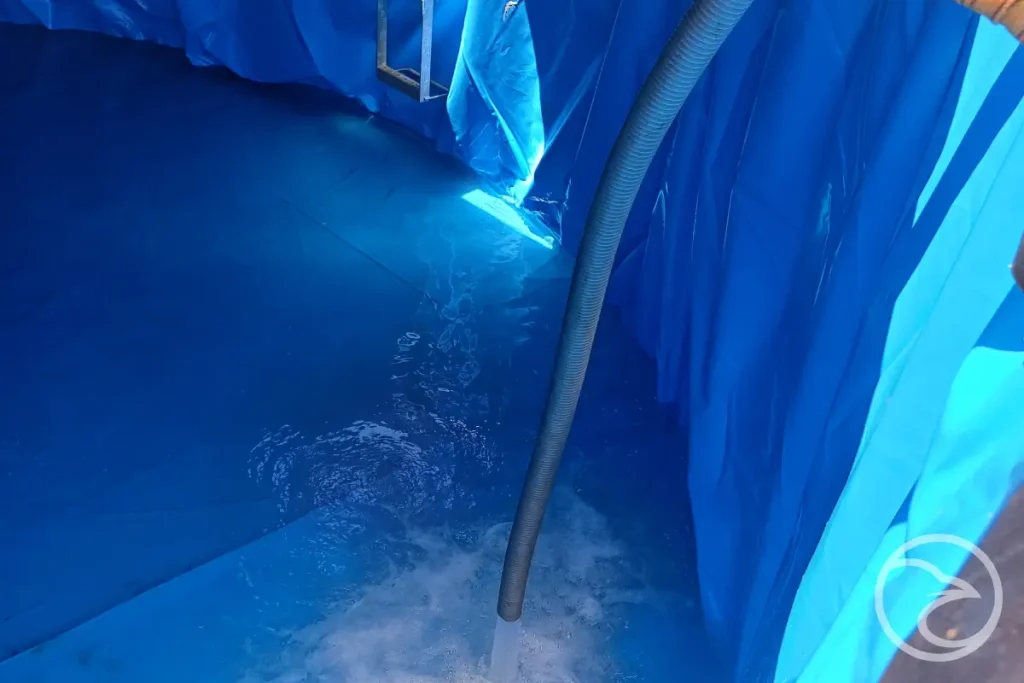
The liner does not operate independently from its surroundings. The surface beneath it can directly influence its durability. Sharp edges can create local pressure against the membrane.
Corrosion products can produce irregular contact points. Rough concrete can increase abrasion risk. Old fasteners and damaged components may also create potential puncture points.
Preparation can therefore include cleaning and correcting unsuitable surface conditions. The exact preparation depends on the tank and selected lining system.
Good preparation creates a more consistent surface for the liner and reduces avoidable mechanical stress.
Fire Water Tank Liner Maintenance
A liner should not be considered maintenance-free. Routine maintenance helps facility owners identify changes before they become larger containment problems. Maintenance should focus on both the membrane and surrounding tank components.
Important areas can include:
- Accessible liner surfaces
- Seams
- Attachment points
- Penetrations
- Inlets and outlets
- Internal fittings
- Tank access points
- Signs of leakage
- Areas around previous repairs
Facility owners should also maintain records of observed changes. A recurring defect can indicate a problem with the tank rather than the liner alone. For example, repeated damage in one location may suggest movement, a rough substrate, or excessive local stress.
Addressing the cause can be more important than repeatedly repairing the membrane.
Inspecting Fire Water Tank Liners
Regular inspections help determine whether the lining continues to provide effective containment. The inspection should look for visible deterioration and changes from previous assessments.
Common warning signs include:
- Tears
- Punctures
- Cracking
- Seam deterioration
- Wrinkling
- Local stretching
- Discoloration
- Loose attachment points
- Damage around penetrations
- Signs of water behind the liner
- Leakage
Particular attention should be given to joints and penetrations. These areas often have more complex geometry than open tank surfaces.
Inspection findings should also be considered alongside the condition of the underlying tank. A liner defect may be the visible result of movement or deterioration elsewhere.
The inspection should therefore assess the lining as part of the complete fire water storage system. The condition and structural integrity of an existing tank can determine whether fire tank relining or replacement is the more appropriate option.
Which Fire Tank Liner Material is Best?
There is no single liner material that is best for every fire water tank. EPDM offers strong flexibility, weather resistance, and durability. Butyl provides very low permeability and established performance in water containment.
Reinforced PVC can provide useful strength and an economical solution for appropriate environments. Other membrane systems can be considered where specific project conditions require different characteristics. The correct fire water tank liner depends on the interaction between material and application.
Tank construction, substrate condition, environment, expected service life, and maintenance requirements should guide the decision. Installation quality is equally important.
A high-performance membrane can still develop problems when the substrate is poorly prepared or installation details create excessive stress.
For facility owners, the most useful approach is therefore to evaluate the complete tank system. Selecting the liner should be one part of that assessment, not the starting point.